
Local SEO is how a contractor shows up when someone nearby searches for the work you do, like "roof repair near me" or "plumber in Lakeland." Get it right and you appear in the Google Map Pack and the top results exactly when a customer is ready to hire. This guide explains, in plain English, what actually moves the needle, and what's a waste of time.
Key takeaways
- Local SEO has three pillars: your Google Business Profile, your reviews, and your website.
- The Map Pack (the box of three businesses with a map) is the highest-value spot to win.
- Proximity, relevance, and prominence are what Google weighs for local ranking.
- A fast, well-structured website with dedicated service and city pages supports everything else.
- Most of the winning is unglamorous: consistent info, steady reviews, and pages that actually answer the question.
What is local SEO, and why does it matter for contractors?
Local SEO is the practice of ranking for searches that have local intent, where the searcher wants a business near them. For contractors and home-services businesses, nearly every valuable search is local: people don't hire a roofer three states away.
It matters because of where the clicks go. The Map Pack and the first few results capture the vast majority of clicks, and those searchers are high-intent, they're often ready to call. Ranking locally means being in front of customers at the exact moment they've decided to hire.
What is the Google Map Pack, and why is it the prize?
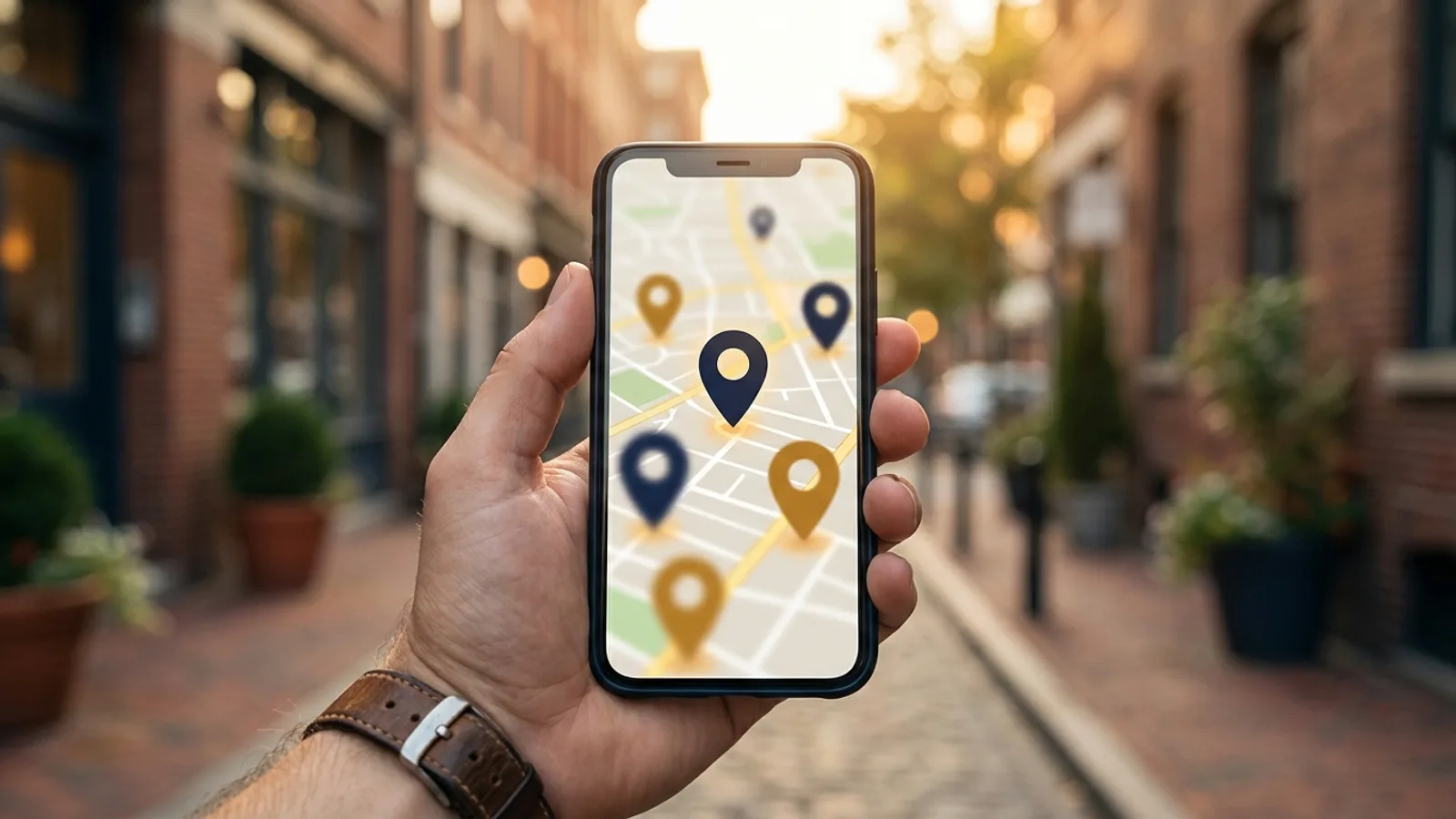
The Map Pack (also called the Local Pack) is the block of three local businesses, with a small map, that sits at the very top of most local searches. It appears above the regular blue links, so it soaks up an outsized share of clicks and calls.
Winning one of those three spots is the single highest-value goal in local SEO. Everything else, your website, your reviews, your profile, ultimately serves the goal of getting into and climbing within that pack.
How does Google decide who ranks locally?
Google has said local ranking comes down to three factors:
- Proximity: how close your business is to the searcher. You can't change your address, but you can target the areas you actually serve.
- Relevance: how well your business matches what they searched. This is driven by your Business Profile categories, your services, and your website content.
- Prominence: how well-known and trusted you are, measured heavily through reviews, links, and your overall web presence.
You have real control over relevance and prominence, which is where the work pays off. Google's own Business Profile ranking guidance confirms these are the levers.
Step 1: Nail your Google Business Profile
Your Google Business Profile is the engine of the Map Pack. Claim it, verify it, and fill out every field:
- Choose the most accurate primary category (e.g., "Roofing contractor"), then add relevant secondary categories.
- List your services in detail, with descriptions.
- Set your service areas to the cities and towns you actually cover.
- Add real photos of your work, your team, and your trucks. Profiles with photos get more clicks.
- Keep your name, address, and phone (NAP) identical everywhere online.
This is the highest-ROI hour you'll spend on local SEO, and it's free.
Step 2: Get consistent, recent reviews
Reviews are one of the strongest prominence signals, and they're what customers read before they call. Two things matter: volume and recency. A profile with fifty reviews and a fresh one from last week beats one with eighty reviews that went quiet a year ago.

The trick is consistency, which almost no one manages by hand. Automating the ask, right when a job is marked complete, is how you keep a steady flow coming. That's exactly what review automation does, and we cover the strategy in how to get more Google reviews.
Step 3: Build a fast, well-structured website
Your website supports your ranking, converts the visitor, and lets you target more than one service and city. The essentials:
- Speed. A slow site loses visitors and hurts ranking. Aim for a largest-contentful-paint under about 2.5 seconds on mobile, per Google's Core Web Vitals.
- Clear structure. A page for each core service and each city you serve, so Google understands what you do and where.
- Local signals. Your NAP, service areas, and embedded map on the site.
- Obvious contact paths. A tap-to-call button and a short quote form on every page.
This is the part most contractors get wrong with a slow, bloated site. A fast, well-built website fixes the foundation.
Should I build separate pages for each service and city?
Yes, when done with real content. Google rewards pages that specifically match the search. A single "Services" page can't rank well for "roof repair in Brandon" and "gutter installation in Riverview" at once, but dedicated pages can.
The key word is real. Thin, near-identical pages churned out for dozens of towns can backfire. Each page needs genuine, specific content about that service or place. Our Central Florida and Tampa Bay location pages are an example of city pages built with real local detail rather than filler.
| Page type | Targets | Example |
|---|---|---|
| Service page | One service | "Roof Replacement" |
| City page | One area you serve | "Web Design in Tampa" |
| Service + city | The highest-intent combo | "Roof Repair in Brandon" |
What about speed-to-lead? Isn't that separate from SEO?
They're two halves of the same job. SEO earns the click; speed-to-lead wins the resulting job. You can rank first and still lose the customer if your phone goes unanswered or a form sits in your inbox for hours.
Research shows leads contacted within five minutes are far more likely to convert. Pairing your local ranking with instant response, through missed-call text-back and instant callback, is what turns rankings into revenue. More on that in our speed-to-lead guide.
How long does local SEO take to work?
Plan for three to six months to see meaningful movement, though some pieces pay off faster. Google Business Profile fixes and a burst of fresh reviews can show results within weeks, while ranking a competitive service-plus-city page takes longer.
It's a compounding game. The businesses that win are the ones that stay consistent, steady reviews, fresh content, an up-to-date profile, month after month, while competitors do it in bursts and give up.
What local SEO tactics are a waste of time?
- Keyword-stuffing your Business Profile name (it violates Google's guidelines and can get you suspended).
- Buying fake reviews, which risks removal and violates the FTC's rules on endorsements.
- Spinning up dozens of thin city pages with no real content.
- Chasing every backlink while ignoring reviews and site speed, the things that actually matter for local.
Skip the tricks. The durable wins come from the fundamentals above.
A realistic local SEO checklist
- Claim and fully complete your Google Business Profile.
- Get your NAP identical across your site, profile, and directories.
- Turn on a system that requests a review after every completed job.
- Put your site on fast, clean hosting and fix Core Web Vitals.
- Build a real page for each core service and each city you serve.
- Add tap-to-call and a short quote form to every page.
- Wire the site to instant lead response so rankings become booked jobs.
- Publish helpful local content (guides like this one) to build relevance.
The bottom line
Local SEO isn't a magic trick, it's the disciplined basics done consistently: a complete Business Profile, a steady stream of reviews, and a fast website structured around your services and service areas, all backed by instant follow-up. Do those, and you'll climb the map pack in your town.
Want a head start? Request a free audit and we'll review your current site, profile, and local competitors, then show you exactly what to fix first.