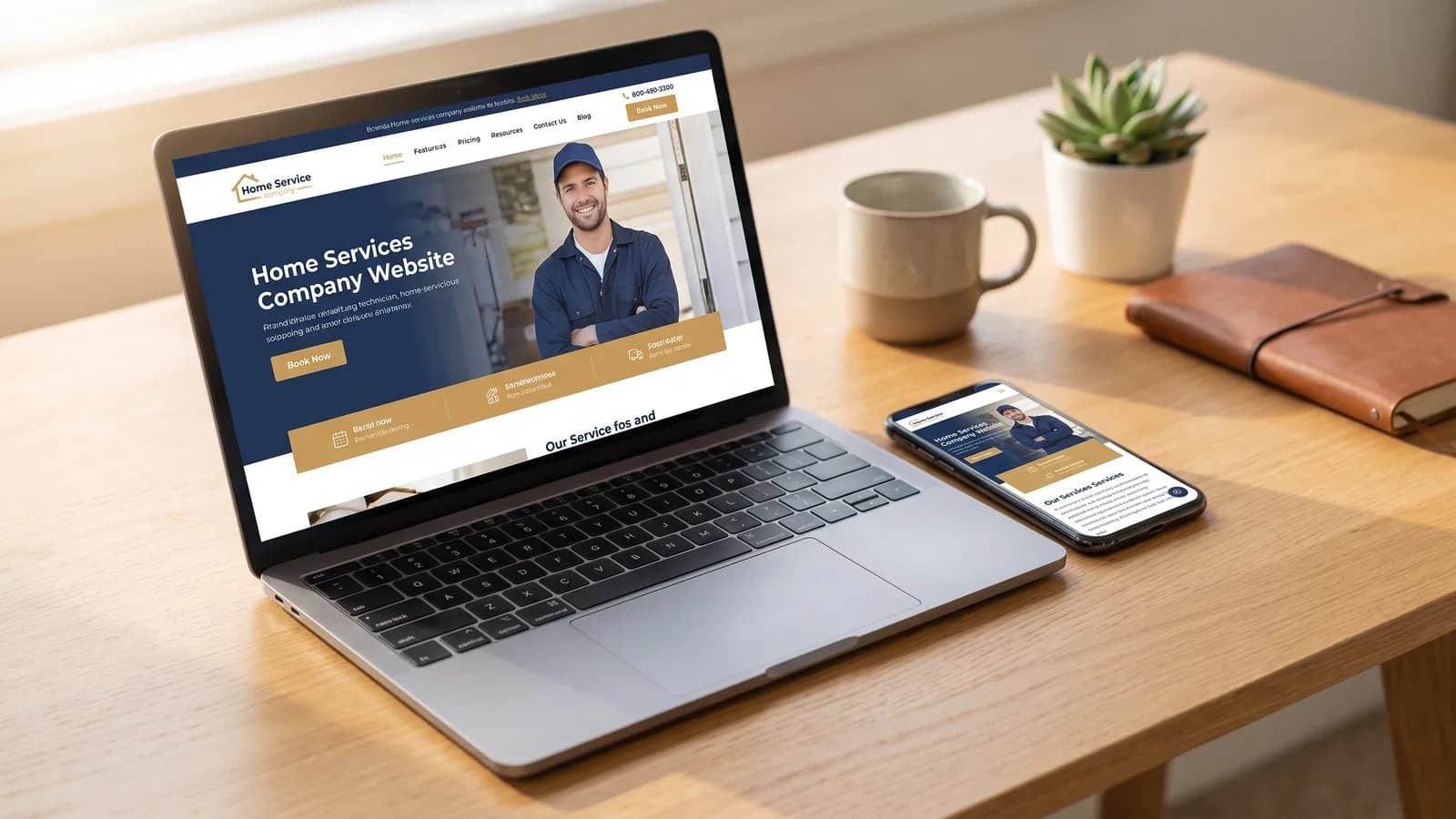
Most contractor websites are digital business cards: a logo, a phone number, a stock photo of a handshake, and not much else. A good one is a lead machine. It loads fast, shows up when someone searches, earns trust in seconds, and makes calling or booking effortless. This playbook breaks down exactly what separates the two.
Key takeaways
- Speed and mobile-first design come before everything. A slow site loses visitors and rankings.
- Local SEO structure (service pages, city pages, consistent NAP) is what gets you found.
- Trust signals (reviews, real photos, licensing, service areas) turn a visitor into a caller.
- Instant, obvious contact plus fast response turns the call into a booked job.
1. It loads fast, especially on mobile
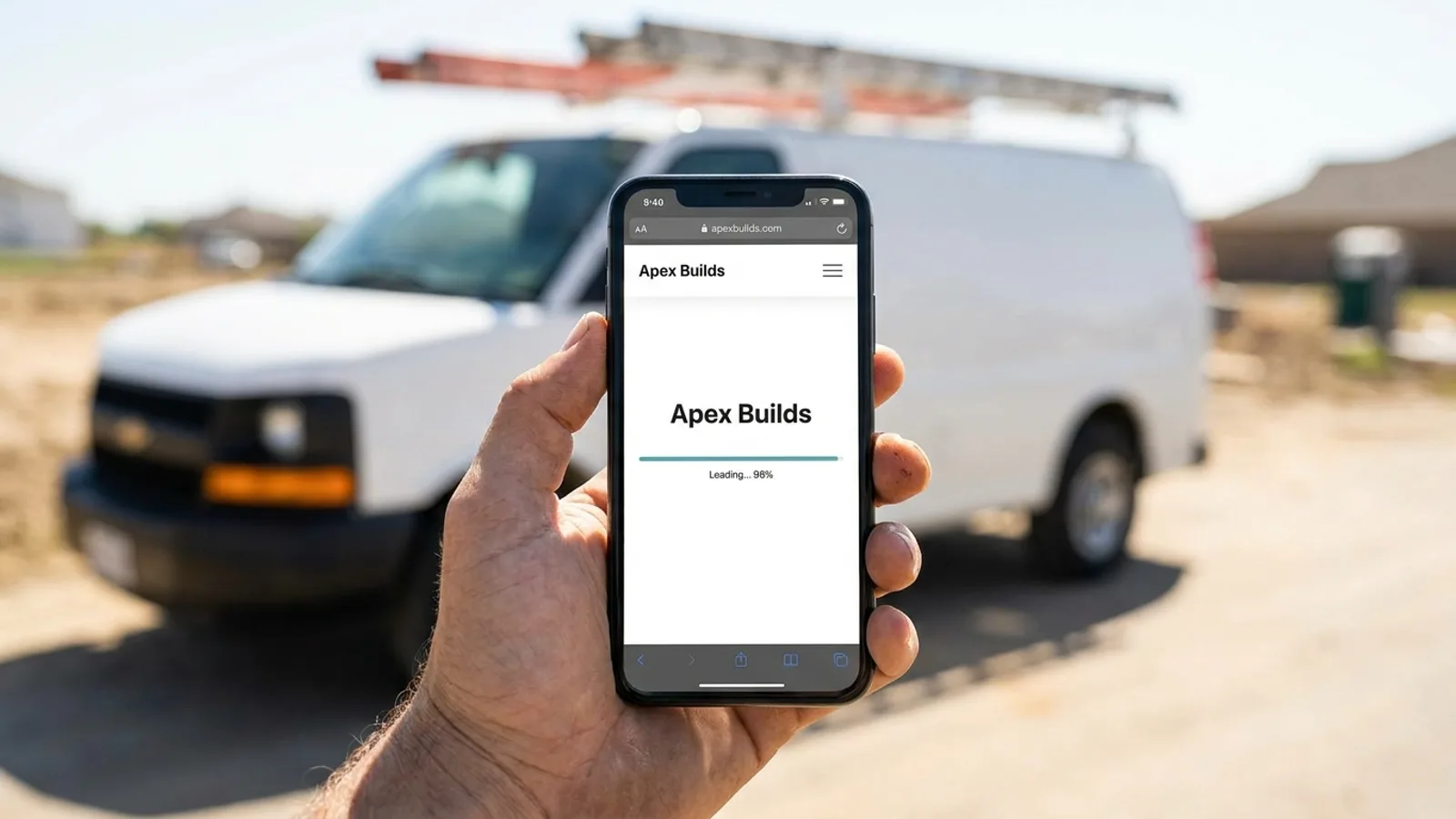
Speed is the foundation. Most people find you on their phone, often on cellular data, and they will not wait. Every additional second of load time measurably increases the share of visitors who bounce before your page appears, and Google uses page speed as a ranking factor through its Core Web Vitals.
A good contractor site loads in under three seconds. That usually rules out the heavy, plugin-stuffed builds that come from generic page builders. If your current site drags, it is quietly costing you jobs every day; we break down the math in is your slow website losing you leads.
2. It is built mobile-first
Over half of local service searches happen on a phone, and for "near me" and emergency searches it is even higher. A good site is designed for the small screen first: big tap targets, a click-to-call button that is always reachable, readable text without pinching, and forms that are short and thumb-friendly.
If your site was designed for desktop and merely "shrinks" on mobile, you are frustrating the majority of your visitors at the exact moment they are ready to hire.
3. It ranks for local searches
A beautiful site nobody finds is worthless. Getting found means structuring the site the way Google rewards:
- A page for every core service (roof repair, roof replacement, gutter installation), not one vague "Services" page.
- A page for every city you serve, so you can rank for "roofer in Lakeland" and "roofer in Winter Haven" separately.
- Consistent name, address, and phone (NAP) matching your Google Business Profile.
- Fast, clean code that Google can crawl easily.
This is exactly why dedicated city pages do so much work, and it pairs with an optimized Google Business Profile to win the Map Pack. Together they are the backbone of local SEO for contractors.
4. It earns trust in the first few seconds
A visitor decides almost instantly whether you look legitimate. The trust signals that matter most:
| Trust signal | Why it works |
|---|---|
| Real photos of your work and team | Proves you are a real, local business, not a lead broker |
| Google reviews and star rating | Social proof at the moment of decision |
| License, insurance, and affiliations | Removes the "will they do it right" fear |
| Clear service areas | Confirms you actually cover their town |
| A real local phone number | Signals a real local operator |
Avoid stock photos of generic workers. Authentic photos of your trucks, crew, and finished jobs outperform them every time. Reviews do double duty here; see how many Google reviews you need.
5. It makes contacting you effortless
Once someone wants to reach you, there should be zero friction:
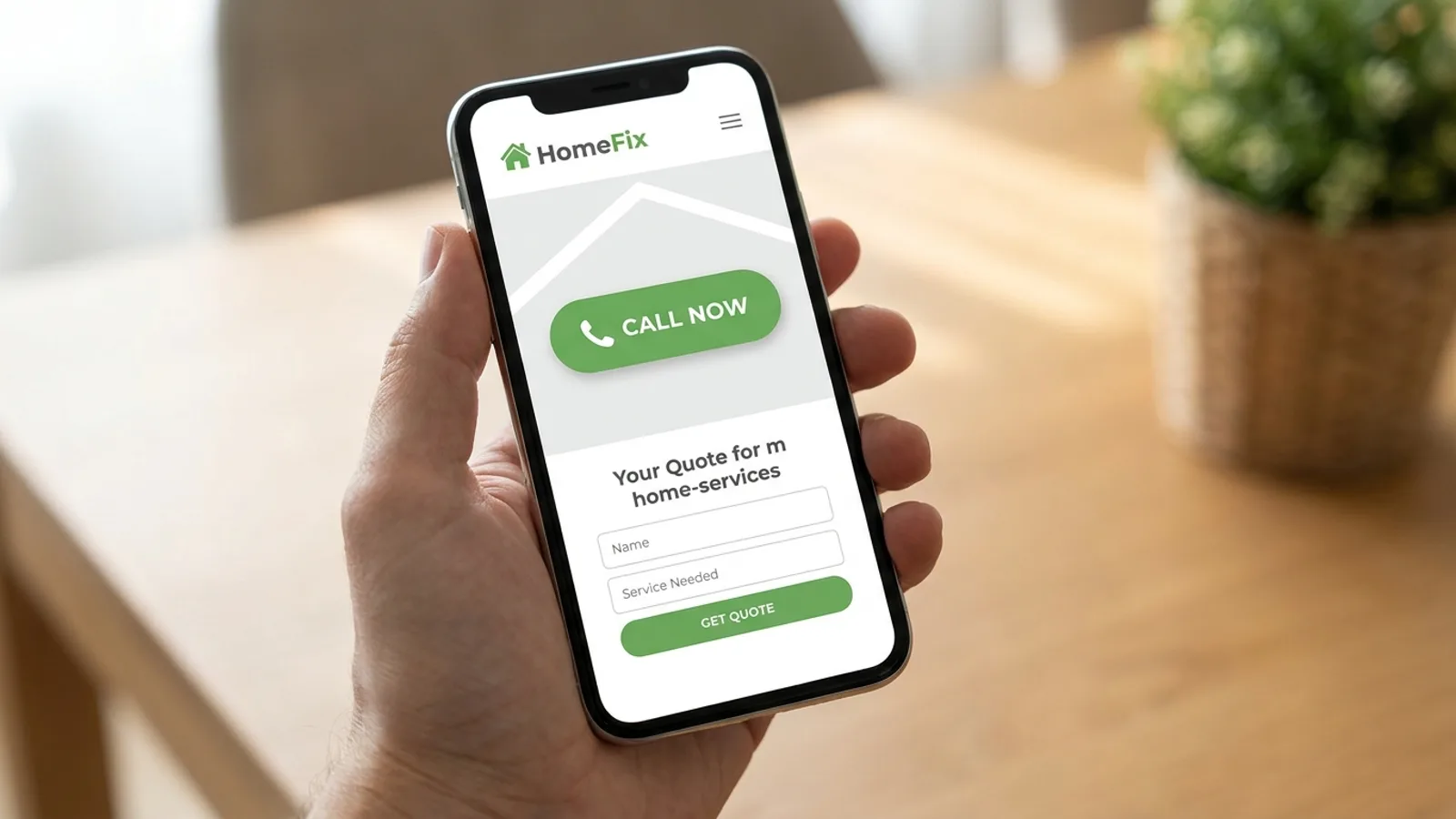
- Click-to-call in the header on every page.
- A short quote form (name, phone, what they need) that does not ask for a life story.
- Clear service areas and hours so they know you can help.
- A visible primary action ("Get a Free Quote") that stands out on every screen.
Never bury your phone number in a footer. The whole point of the site is to generate the contact.
6. It responds instantly (the part most sites miss)
Here is what separates a good website from a great lead system: what happens after someone reaches out. A gorgeous site that generates a call you miss, or a form that sits in an inbox for six hours, is a wasted investment. Speed-to-lead is decisive; the odds of connecting drop dramatically within minutes of an inquiry, as we cover in the speed-to-lead guide.
A good contractor website is wired to respond the instant a lead comes in:
- Missed-call text-back so a missed call turns into a text conversation, not a lost job.
- Instant callback so a form fill triggers an immediate call while interest is hot.
- An AI receptionist to answer and qualify around the clock.
The website captures the lead; these systems make sure you actually win it.
7. It has clean, modern, on-brand design
Design still matters, just not the way many contractors think. It is not about animation or trendy effects (which often slow the site down). It is about looking clean, current, and credible: consistent colors, professional typography, plenty of whitespace, and a layout that guides the eye to the next step. Dated or cluttered design makes even a great contractor look second-rate.
8. It is measurable
A good site is wired for tracking from day one: call tracking, form conversions, and analytics, so you know which pages and services bring the work. Without measurement you are guessing. With it, you can double down on what is booking jobs.
Template vs custom: which do you need?
A polished template can be a fine starting point for a brand-new business on a budget. But most contractors outgrow them fast: page builders bolt on heavy code that hurts speed and Core Web Vitals, and their rigid structure makes real local SEO (dozens of service and city pages) awkward. A custom-built site is faster, ranks better, and scales with you. We compare the trade-offs in WordPress vs a custom website, and lay out real numbers in how much a small business website costs.
The contractor website checklist
- Loads in under three seconds on mobile.
- Designed mobile-first with always-visible click-to-call.
- A page for each core service and each city served.
- Consistent NAP matching your Google Business Profile.
- Real photos, reviews, license, and service areas front and center.
- A short, obvious quote form on every page.
- Instant-response systems wired to the leads it generates.
- Analytics and call tracking in place.
The bottom line
A good contractor website is not a brochure, it is your hardest-working salesperson: fast, findable, trustworthy, and wired to respond the second a lead arrives. Nail speed, local SEO, trust, and instant response, and your site pays for itself in booked jobs.
Want to see how your current site stacks up? Request a free audit and we will show you exactly what to fix first, or explore what a custom-built FergusonHQ site includes.